
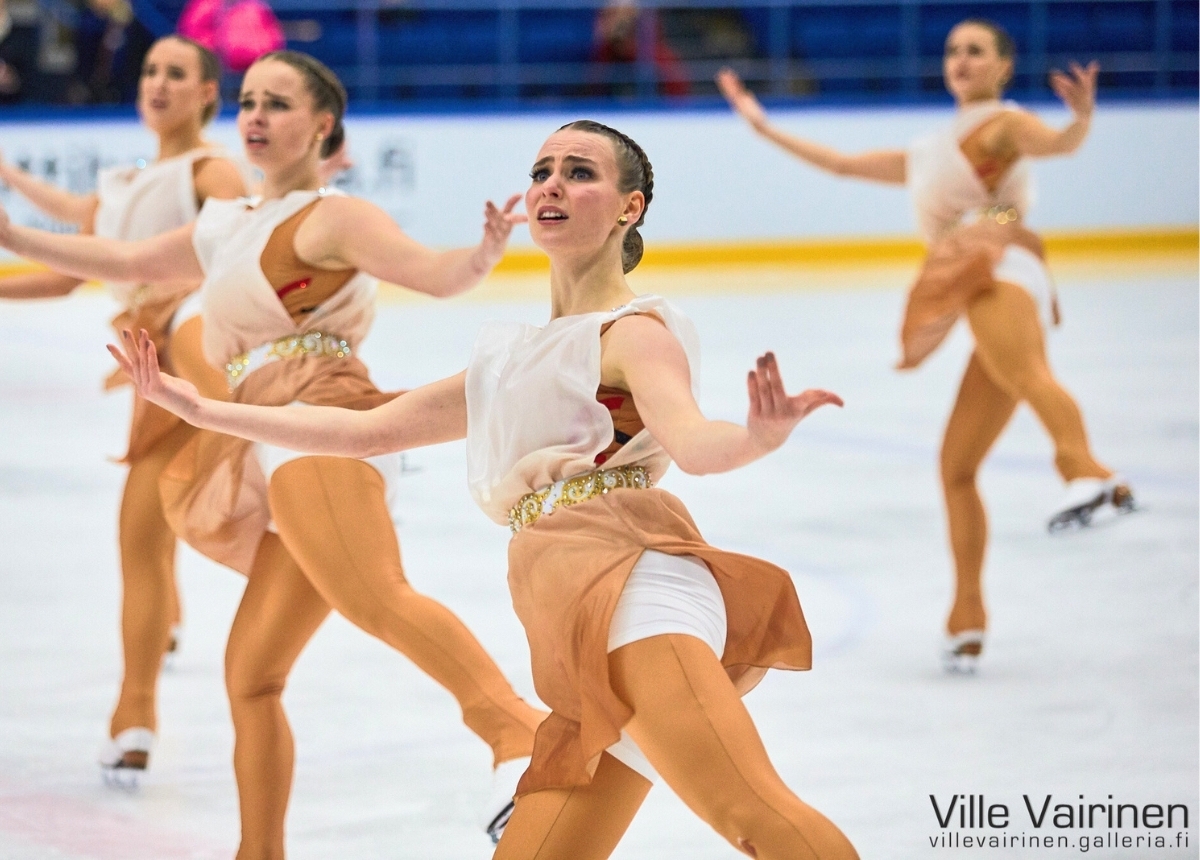
Tessa Tamminen retired from Marigold IceUnity two years ago after an impressive 20-year career in synchronized skating. “I thought retiring would free up a lot of time for everything else – but I’m so busy now!”
Currently, Tessa is preparing for a medical school entrance exam, coaching younger skaters in her former club, skating with other former Marigold skaters in team Exit, and serving as a board member for the Athletes of Finland. She just spent a month coaching in Australia as well.
Currently, Tessa is preparing for a medical school entrance exam, coaching younger skaters in her former club, skating with other former Marigold skaters in team Exit, and serving as a board member for the Athletes of Finland. She just spent a month coaching in Australia as well.
“There are many ways to still be involved, and for me, that helps.”
“There are many ways to still be involved, and for me, that helps.” But she has struggled with the decision, which wasn’t in her own hands but due to financial reasons. “Maybe only now I have slowly admitted it to myself that I’m a retired athlete. It was hard to admit when I didn’t want to believe it myself at first.” Like many others, Tessa experiences an annual contemplation: “I noticed it again when the season changed that I went like ‘okay, what if I just called, what if I just went to a try-out, could I still skate?’.”
According to Satu Kaski, PhD, a certified sports psychologist who has been working with synchronized skaters as well, experiencing this longing is normal after finishing competitive sports. It can be either a sign to give it another go or, more likely, simply a feeling you need to accept and process.
According to Satu Kaski, PhD, a certified sports psychologist who has been working with synchronized skaters as well, experiencing this longing is normal after finishing competitive sports. It can be either a sign to give it another go or, more likely, simply a feeling you need to accept and process.
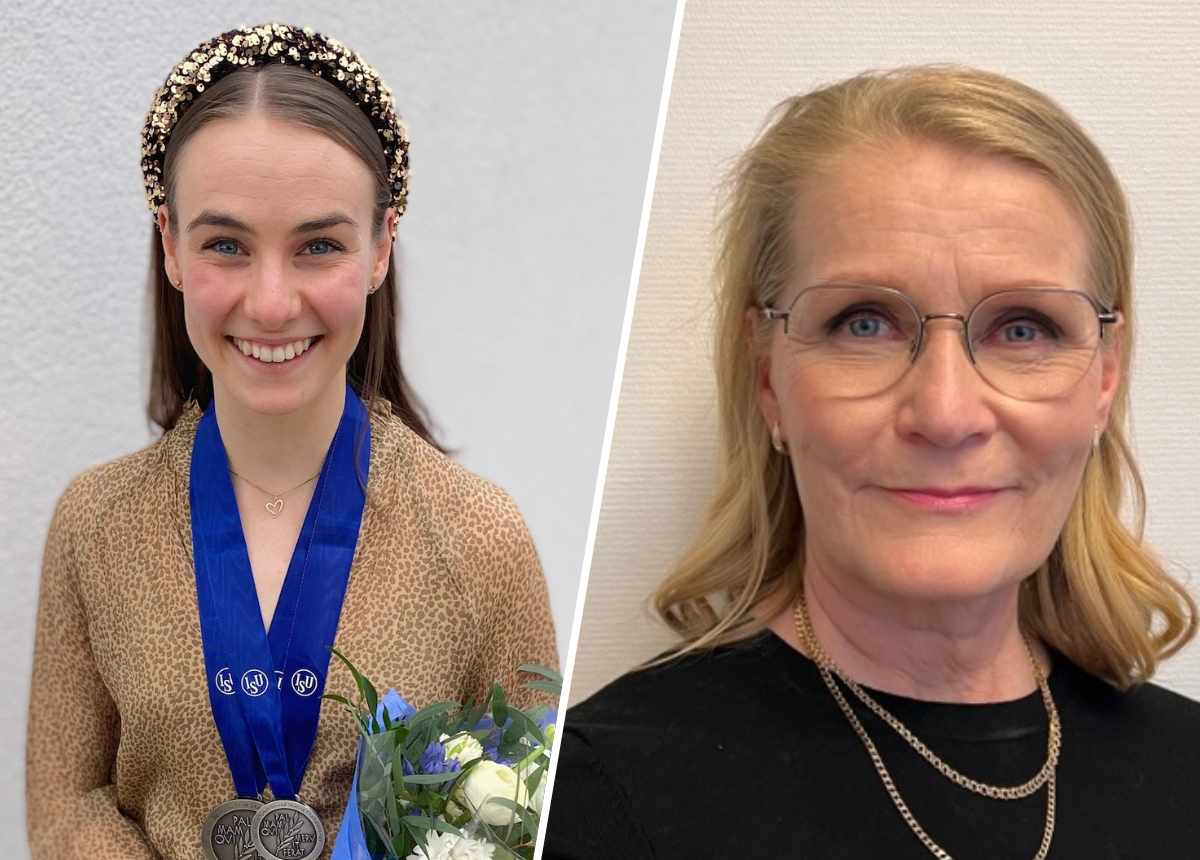 Tessa Tamminen (left) and Satu Kaski discuss retirement in synchronized skating.
“Synchronized skating is a sport where you start quite early, and sometimes you reach teenagerhood and go ‘ugh, I’ve seen this already, been there, done that’, and want to stop. But the longing stays – ‘is it still possible’ – and then you go back, get in, and get back in shape.”
“The other, more usual scenario after finishing your sports career is that it is difficult to get the same type of kick out of anything… That creates the longing, even though rationally, you’ve decided not to return or it’s not possible,” Satu explains. “It’s like its own little society. And yet, it’s just sports. But when you’re in it, it’s everything. It produced massive emotional highs and emotional lows.”
“The other, more usual scenario after finishing your sports career is that it is difficult to get the same type of kick out of anything… That creates the longing, even though rationally, you’ve decided not to return or it’s not possible,” Satu explains. “It’s like its own little society. And yet, it’s just sports. But when you’re in it, it’s everything. It produced massive emotional highs and emotional lows.”
How do you know when it's the right time to quit and not go back?
“Usually, motivation is at the centre of things. The internal fire that you want to make the effort. It still gives you more good than bad, even though there might be bad moments,” Satu condenses. Tessa continues: “When we were still thinking about it, the former skaters told us ‘You will know, you will feel it’.”
Tessa encourages skaters to continue as long as possible: “Many young skaters retire super early because they feel like they should already be in university or that they’re already X age, and that bums me out. We should learn to see the value in skating and sports, how it teaches you things you cannot learn from school.”
Tessa encourages skaters to continue as long as possible: “Many young skaters retire super early because they feel like they should already be in university or that they’re already X age, and that bums me out. We should learn to see the value in skating and sports, how it teaches you things you cannot learn from school.”
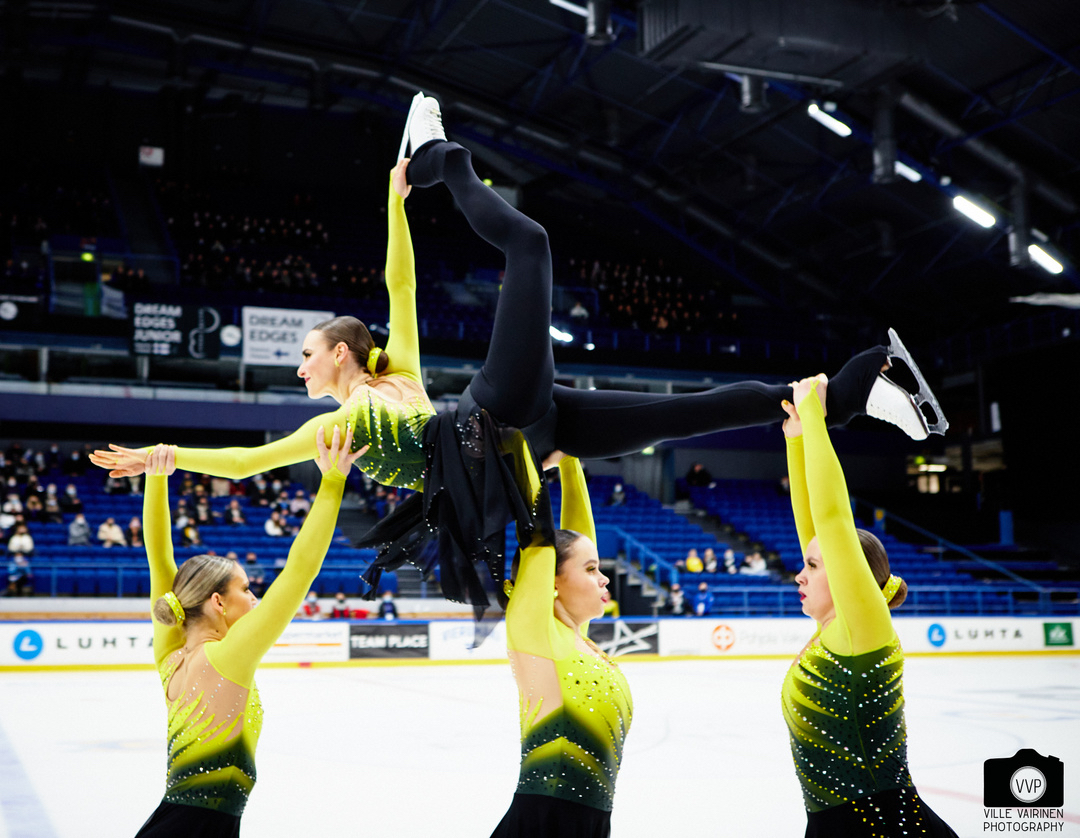 Tessa skated for over 20 years in synchro, finishing with the Marigold Ice Unity team. (Credits: Ville Vairinen)
For her, competing in synchronized skating has given so much. “The ability to see things as a longer project, a process. I think athletes have the huge benefit that they’ve learned to work for the things they want to achieve, and also, to face and handle disappointments. Athletes know how to analyse situations subjectively, not to think ‘I’m a shit person’ but ‘okay this situation went like this, how can I do better’,” she recounts.
Despite the benefits of a sports career, there are also things to learn out after it ends, such as focusing on achievement or giving your 100% every day. “My boyfriend once said to me ‘Tessa, have you noticed you have a very performance-oriented self-esteem’. So, I value myself through the things I achieve,” Tessa explains.
“In competitive sports, giving 100% allows you to compete on that level; it takes that much, but nothing else in life is like that. You don’t give 100% at work today and tomorrow the same – of course not. You give 50% and it looks to others like you’re doing 100% all the time, even though you might feel like you didn’t do much,” Satu continues.
Other things will inevitably change as well – for example, the feeling in your body or the meaning of sports in your life. “It’s not rare that sometimes when you quit, you stop sports completely,” Satu starts. According to her, the break can do good for former athletes and help in the process of figuring out how you want to move outside of competing. “The break won’t harm your health.”
Despite the benefits of a sports career, there are also things to learn out after it ends, such as focusing on achievement or giving your 100% every day. “My boyfriend once said to me ‘Tessa, have you noticed you have a very performance-oriented self-esteem’. So, I value myself through the things I achieve,” Tessa explains.
“In competitive sports, giving 100% allows you to compete on that level; it takes that much, but nothing else in life is like that. You don’t give 100% at work today and tomorrow the same – of course not. You give 50% and it looks to others like you’re doing 100% all the time, even though you might feel like you didn’t do much,” Satu continues.
Other things will inevitably change as well – for example, the feeling in your body or the meaning of sports in your life. “It’s not rare that sometimes when you quit, you stop sports completely,” Satu starts. According to her, the break can do good for former athletes and help in the process of figuring out how you want to move outside of competing. “The break won’t harm your health.”
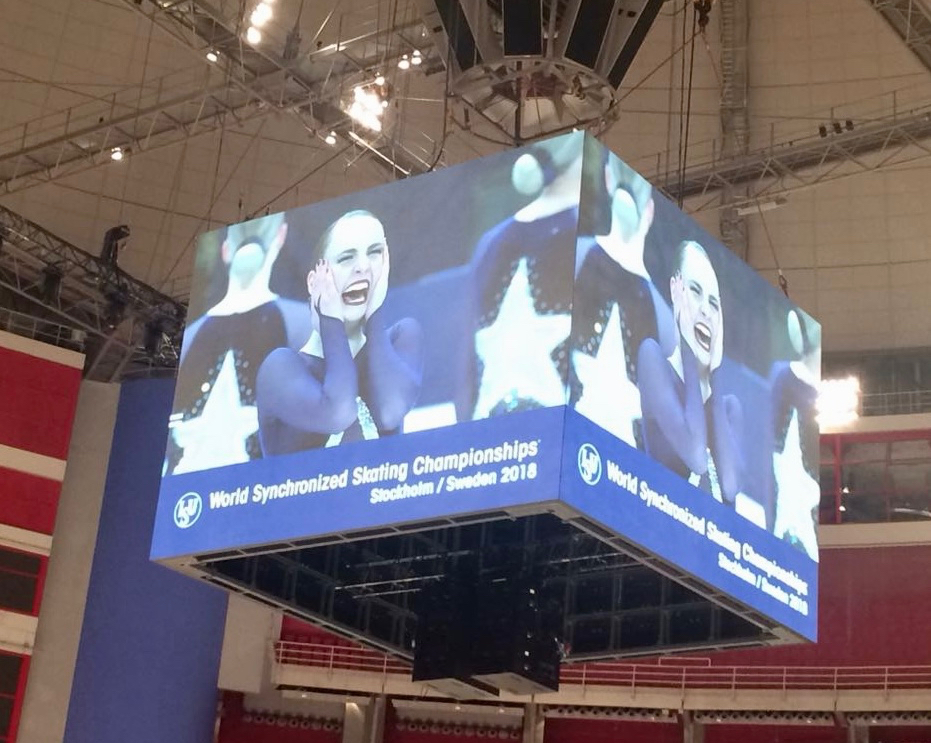
Retiring athletes might require additional support
Tessa still gets a lot of out of doing sports for fun, which she describes a form of therapy. Right now, she enjoys running and skating in the Exit-team consisting of former Marigold skaters. “That has been an amazing support network, to see that people have survived life after. You get to hear different types of stories. There is no right or wrong way to experience retiring.” She has also gotten support from former coaches, team leaders, and her own family.
In addition to talking to friends and family, retiring athletes might require additional structural support. For example, Tessa is in the board of the Marigold alumni association, and they’re currently working on assigning each retiring skater an alumnus as a support person.
In the club Satu works in, exit interviews are arranged for retiring skaters: “It’s just one, but there you go through how the career was, what did you get out of it, what do you see in front of you now… With small things, you can make a big impact. It’s for athletes to know they’re important and cared for.”
In addition to talking to friends and family, retiring athletes might require additional structural support. For example, Tessa is in the board of the Marigold alumni association, and they’re currently working on assigning each retiring skater an alumnus as a support person.
In the club Satu works in, exit interviews are arranged for retiring skaters: “It’s just one, but there you go through how the career was, what did you get out of it, what do you see in front of you now… With small things, you can make a big impact. It’s for athletes to know they’re important and cared for.”
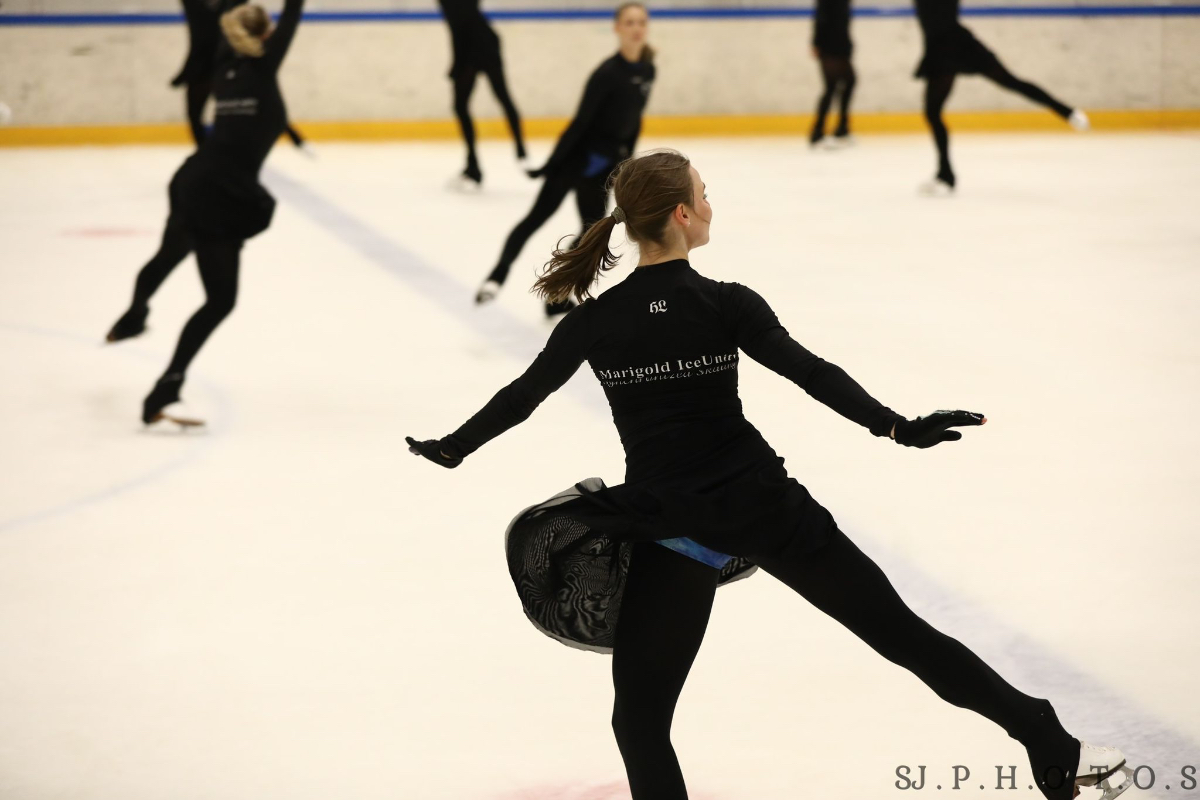 (Credits: S.J.Photos)
If processing the end of your synchronized skating career gets too challenging, Satu recommends talking to a sports psychologist with a low threshold. “Pain is inevitable, but suffering is unnecessary,” she advises. She encourages all athletes to think about questions like ‘How is my career going to go? What else do I have in life? What happens after?’ already years before retiring becomes relevant. “Because your sports career always inevitably ends.”
And remember, when it does, there is life after: “When I was crying about retiring, my dad said ‘Tessa, remember there is life outside the rink, you just don’t know it yet’. And that is true,” Tessa remembers. “I know that I have a lot to give to the new generation of skaters as well – and that’s a lovely thought.”
And remember, when it does, there is life after: “When I was crying about retiring, my dad said ‘Tessa, remember there is life outside the rink, you just don’t know it yet’. And that is true,” Tessa remembers. “I know that I have a lot to give to the new generation of skaters as well – and that’s a lovely thought.”
Tessa’s tips for retiring skaters
1. If possible, retire only when you really feel like it. Do not think about time limits or that you should be somewhere further in life already, it’s not true. Enjoy skating as long as it feels right.
2. Give it time. Do not ignore any feelings. When they come, face them, and move on.
3. Try to talk to someone. Don’t keep to yourself.
2. Give it time. Do not ignore any feelings. When they come, face them, and move on.
3. Try to talk to someone. Don’t keep to yourself.
Satu's tips for retiring skaters
1. Give it your everything now. Enjoy the journey.
2. Prepare for what comes after the career. When your competitive career ends, what do you want written in the ‘tombstone of your career’? You can control where you are now.
3. Remember that your sports career is not only about medals or learned skills. You usually get a lot of valuable capital out of it. Think about what that is for you.
2. Prepare for what comes after the career. When your competitive career ends, what do you want written in the ‘tombstone of your career’? You can control where you are now.
3. Remember that your sports career is not only about medals or learned skills. You usually get a lot of valuable capital out of it. Think about what that is for you.