
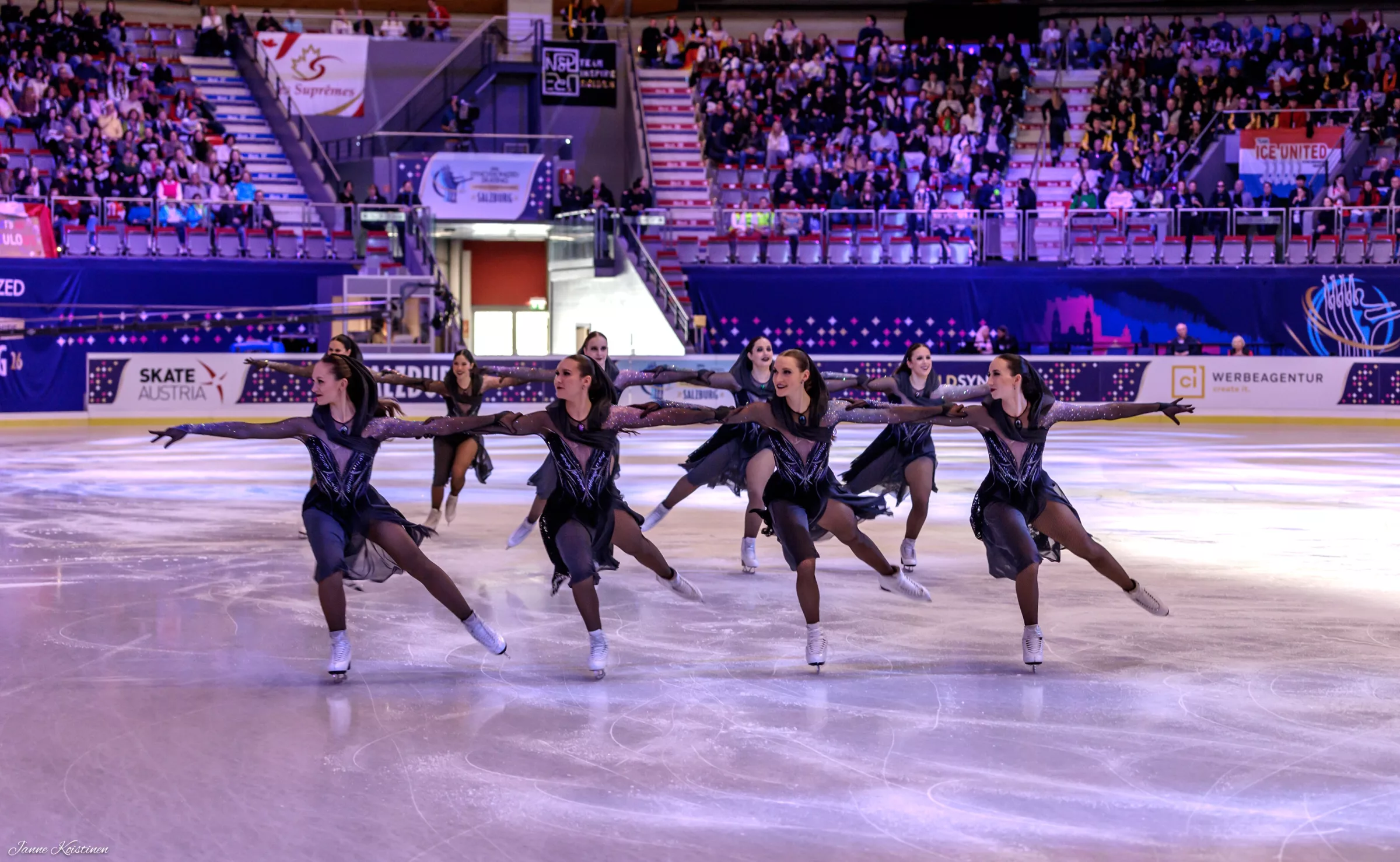
How was this demonstration team created?
Marilyn Langlois, head coach of Les Suprêmes: Skate Canada approached senior team coaches to see whether there was interest. On my end, I brought together a group of retired athletes in less than 48 hours, found early-morning ice time to fit their schedules, and we launched the project with Amélie Brochu.
We started in January with a fitness tune-up, knowing that some athletes hadn't skated seriously in several years. We built the program quickly with Samuel Chouinard and Sarah Steben, with input from Shae Zukiwsky and Michoue Sylvain. All of it at a pace of about three training sessions per week, right in the middle of a busy competition period… it was intense.
Marilyn Langlois, head coach of Les Suprêmes: Skate Canada approached senior team coaches to see whether there was interest. On my end, I brought together a group of retired athletes in less than 48 hours, found early-morning ice time to fit their schedules, and we launched the project with Amélie Brochu.
When did you start and at what pace?
"At the level of lineups, there may be slightly fewer possibilities"
What are the main challenges of the nine-person format?
It's still early to draw conclusions, but in terms of formations, there may be slightly fewer possibilities. That said, with creativity, you can always find interesting solutions.
What were the ISU's guidelines?
We had guidelines, notably to make the format more accessible for broadcast, while preserving the essence of synchro, with a strong emphasis on synchronization.
How does this format change team dynamics?
With nine skaters, bonds form very quickly. Team chemistry develops faster, which is a very positive aspect.
It's still early to draw conclusions, but in terms of formations, there may be slightly fewer possibilities. That said, with creativity, you can always find interesting solutions.
What were the ISU's guidelines?
We had guidelines, notably to make the format more accessible for broadcast, while preserving the essence of synchro, with a strong emphasis on synchronization.
How does this format change team dynamics?
With nine skaters, bonds form very quickly. Team chemistry develops faster, which is a very positive aspect.
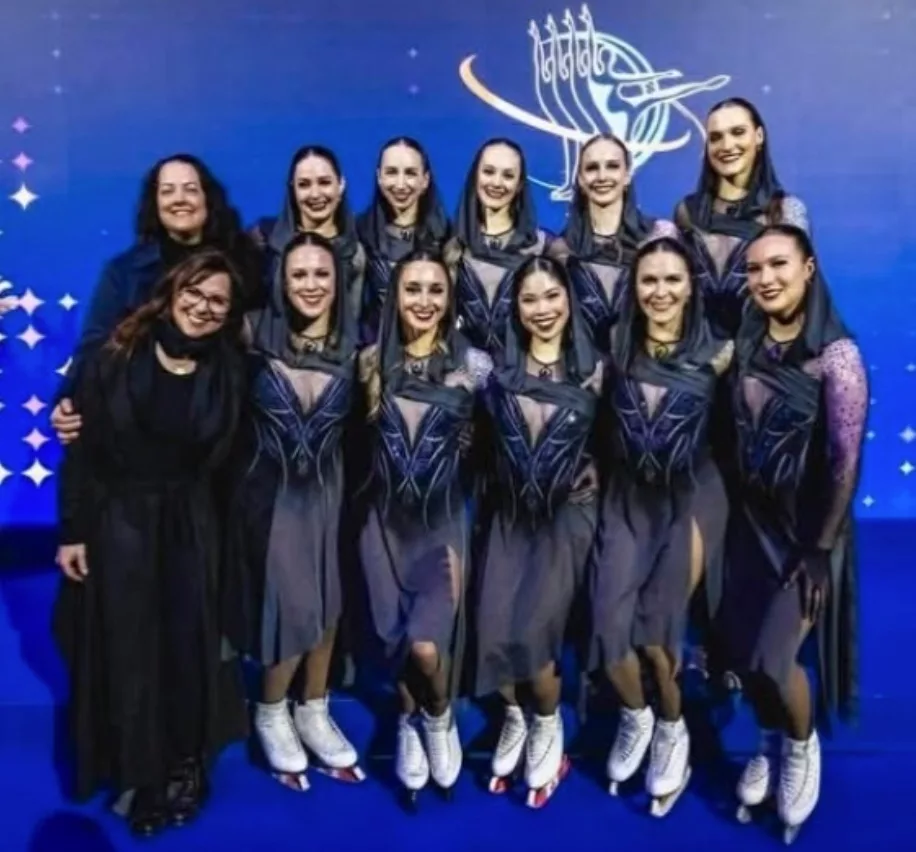 Former Canadian skaters took on the Synchro 9 challenge at the 2026 Worlds with a witch-themed program. • Les Suprêmes - 2026
What opportunities can this format bring?
The long-term goal is clearly a place at the Olympic Games. It's a project that can help move the discipline in that direction.
What did you have to adapt?
We had to stay cautious, especially with athletes returning after a break. We would have liked to include more complex lifts, but safety came first. Choreographically, some elements looked smaller, so we leaned more on speed and syncopated effects.
The long-term goal is clearly a place at the Olympic Games. It's a project that can help move the discipline in that direction.
What did you have to adapt?
We had to stay cautious, especially with athletes returning after a break. We would have liked to include more complex lifts, but safety came first. Choreographically, some elements looked smaller, so we leaned more on speed and syncopated effects.
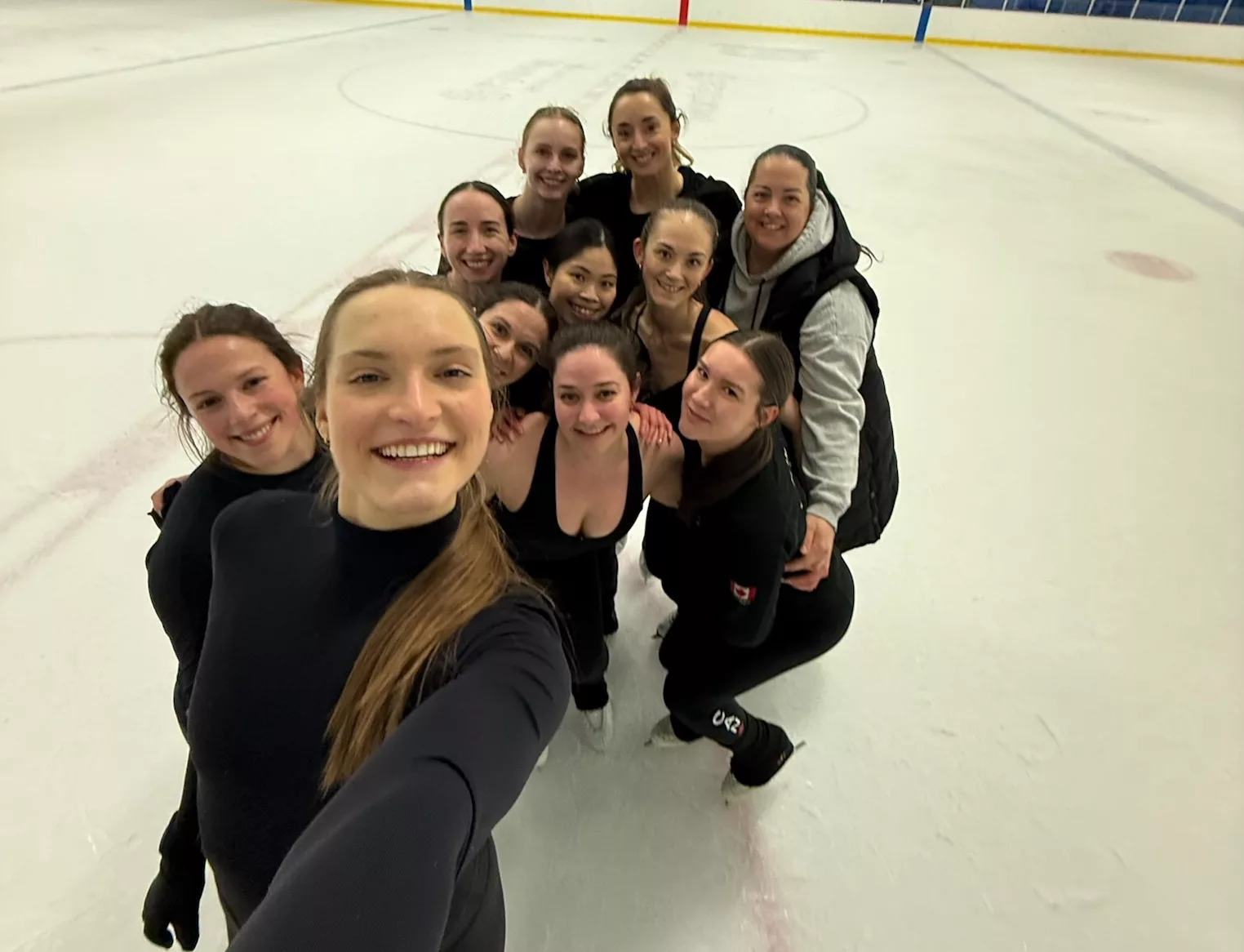
There has been criticism of Synchro 9 and the evolution of the discipline: what is your view?
I think we need to stay open-minded. Personally, I really enjoyed the experience. This format greatly highlights the skaters' individual quality: with nine, you can't hide anything.
Any advice for coaches?
To be creative, to explore different imagery, to play with the music and, above all, to showcase their athletes' strengths.
What's next for Synchro 9?
The team was created specifically for this project, with the aim of presenting a vision of the discipline to the IOC. There are no plans for what comes next. These are athletes who are established in their lives outside skating and who agreed to give a few months back to their sport.
I think we need to stay open-minded. Personally, I really enjoyed the experience. This format greatly highlights the skaters' individual quality: with nine, you can't hide anything.
Any advice for coaches?
To be creative, to explore different imagery, to play with the music and, above all, to showcase their athletes' strengths.
What's next for Synchro 9?
The team was created specifically for this project, with the aim of presenting a vision of the discipline to the IOC. There are no plans for what comes next. These are athletes who are established in their lives outside skating and who agreed to give a few months back to their sport.
At the 2026 World Championships in Salzburg, the Synchro 9 format was presented as a demonstration by three specially formed teams: Canada, the United States and Finland. On the American side, find here an article devoted to this project for additional insight into this new format.